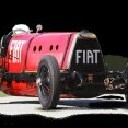
At the 2018 Mille Miglia, the Alfa Romeo brand celebrates the 90th anniversary of its first victory in this great race

Partner:
Feiertag?

    • 1928 saw the first of Alfa Romeo's 11 victories in the event, held from 1927 to 1957: a record which will now never be beaten.
    • To mark this amazing anniversary, the 36th historic re-evocation of the "most beautiful race in the world" will pass by the recently renovated Museo Storico Alfa Romeo, named "La macchina del tempo".
    • Competing in the race will be several wonderful classic Alfa Romeo cars from the FCA Heritage collection: from the 6C 1500 SS to the 6C 1750 GS, and from the 1900 SS to the 1900 Sport Spider.
    • Alongside these rarities, the parade will also include 30 Giulia and Stelvio cars which the brand will make available to the organisers as the official cars for the 2018 Mille Miglia.
    • The "Quadrifoglio" symbol continues to shine brightly on the most high-performing Alfa Romeo cars of yesterday and today, as well as on the C37 driven by the Alfa Romeo Sauber F1 Team. The legend continues.


    The 36th re-evocation of what Enzo Ferrari liked to call the "most beautiful race in the world" will be held from 16 to 19 May on the traditional Brescia-Rome-Brescia course. An unmissable event that Alfa Romeo will attend as both Automotive Sponsor and "guest of honour", as the 2018 edition coincides with the 90th anniversary of its first victory in the legendary race, run from 1927 to 1957.
    Magnificent historic Alfa Romeo cars - 6C 1500 SS, 6C 1750 GS, 1900 SS and 1900 Sport Spider models - from the collection of FCA Heritage, the Group department dedicated to protecting and promoting the historical heritage of FCA's Italian brands, will be also be taking part in the Brescia-based event. Alongside these four rarities will be 30 Giulia and Stelvio cars, serving as official cars for the 2018 Mille Miglia.
    Celebratory visit to the Museo Storico Alfa Romeo - "La macchina del tempo"
    It was on 1 April 1928 that Giuseppe Campari and Giulio Ramponi reached the top step of the podium with the 6C 1500 Super Sport, one of Vittorio Jano's masterpieces, unbeatable thanks to its revolutionary mechanical design, including a fixed head and a supercharged engine. The extraordinary car covered the 1,618 km course at a remarkable average speed of 84 km/h, to obtain the first of Alfa Romeo's 11 victories, 7 of them in consecutive years, from 1932 to 1938: a record which can now never be beaten.
    The brand will celebrate this extraordinary anniversary with a series of special events. In one of the most deeply significant, on Saturday 19 May the Mille Miglia will visit the Museo Storico Alfa Romeo, named "La macchina del tempo", where the competitor cars will take part in a time trial on the in-house circuit at the Arese site. It is an original way to celebrate the Alfa Romeo legend and pay homage to the 69 models on display inside the museum, which have written some of the finest pages in the history of world motor sports: from the first A.L.F.A. model(24 HP) to the famous 6C 1750 Gran Sport which won the Mille Miglia driven by Tazio Nuvolari, and from the Gran Premio 159 "Alfetta 159" - victorious in the Formula 1 World Championship with Juán Manuel Fangio at the wheel - to the splendid 33 TT 12.
    Four rare Alfa Romeo cars at the classic race
    Several fine classic Alfa Romeo cars from the collection of FCA Heritage, the group department dedicated to protecting and promoting the historic heritage of the Italian FCA brands, will be present at the event in Brescia. In particular, the eyes of all fans will be on the 6C 1750 Gran Sport, the legendary model which Tazio Nuvolari and Giovanni Battista Guidotti drove to victory in the Mille Miglia at 1930. As well as the legendary "overtaking without lights" episode, this was also the race when Nuvolari achieved the unprecedented feat of averaging 100 km/h over the entire course. The stunning bodywork was created by Milan coachbuilder Zagato, and still inspires awe in all those lucky enough to see it today. The second car taking part is another splendid piece of history: it is a marvellous 1928 6C 1500 Super Sport, with bodywork by Stabilimenti Farina, which won the historic re-evocation of the Mille Miglia in 2005, in 2007 - when it was also victorious in the "Mille Millas Sport" in Argentina - and in 2008. The vehicle is equipped with a 6-cylinder, 1487 cc engine, which delivers maximum output of 76 HP at 4,800 rpm, reaching a top speed of 140 km/h. 31 of these cars were built between 1928 and 1929.
    Also tackling the 2018 Mille Miglia course will be a 19561900 Super Sprint and a 1954 1900 Sport Spider. The first of these is an elegant coupé with Touring bodywork, the "gran tourism" version of the 1900, the model that became famous in the 1950s for its advertising slogan: "the family car that wins races". The 1900 SS is no newcomer to the Mille Miglia, since in the 1950s, when the competitive race was still being held, it was the car of choice of many "gentlemen" drivers, on account of its superb performance and reliability. At its side, the 1900 Sport Spider of 1954 produced in just two units. Equipped with the 4-cylinder twin-cam dry sump "1900" engine, with maximum power boosted to 138 HP, this racing roadster reaches speeds of 220 km/h, thanks to a weight of just 880 kg and particularly efficient aerodynamics. With its beautiful Bertone design, the 1900 Sport Spider comes with a 5-speed transmission and a De Dion rear axle: performance and handling worthy of a modern car, responsive and reliable, with outstanding road-holding abilities.
    The "Quadrifoglio" symbol, identifying the most high-performing Alfa Romeo cars of yesterday and today
    Also participating in the 2018 Mille Miglia will be 30 Giulia and Stelvio cars, which the brand will make available to the organisers as the official cars for the event. There could be no finer proof of the strength of the bond that links the cars of the past to those being built today. Anyone admiring the historic cars that won Alfa Romeo its status as a racing legend will easily appreciate how, over the years, the tough testing ground of racing has shaped the invaluable heritage of style and engineering so central to the cars of today. Among these, Alfa Romeo Stelvio Quadrifoglio, crowned "fastest SUV in the world" at the famous Nürburgring circuit last October, when it set a new record for its class: 7 minutes and 51.7 seconds, knocking eight seconds off the previous best in the SUV category. In 2016, the Giulia Quadrifoglio set the lap record for the four-door sedan category on the same circuit, with a time of 7 minutes and 32 seconds.
    Not to forget that this year the legendary "Quadrifoglio" will be proudly displayed on the C37 car of the Alfa Romeo Sauber F1 Team, as it takes part in the Formula 1 world championship, at the very highest level of motor sports competition. Absolutely appropriate, since the famous good-luck charm has a fascinating history, deeply rooted in the racing world. The first Alfa Romeo car to carry the Quadrifoglio was the "RL" driven by Ugo Sivocci which won the 15th edition of the Targa Florio in 1923. The same good-luck emblem also appeared on Brilli Peri's "P2" when he triumphed in the first "Motor Racing World Championship" in Monza in 1925, gaining the first of Alfa Rome's five World Titles, and it was present again in 1950 and 1951, when Giuseppe "Nino" Farina and Juan Manuel Fangio drove the Alfa Romeo 158 and 159 cars, the famous "Alfettas", to success in the first two Formula 1 World Championships. And today the legendary symbol returns to the highest level of motor racing to show the whole world the continuing strength and success of the Alfa Romeo philosophy, a constant search for excellence applied to racing, then transferred in its entirety to the brand's production cars.
    The legend continues.
    Turin, 5 March 2018

    Pessimisten stehen im Regen, Optimisten duschen unter den Wolken.
    Manchmal höre ich auch auf den Namen Gerd ;)

  • Alfa Romeo bei der Oldtimer-Rallye Mille Miglia 2018: Vier legendäre Rennwagen erinnern an ersten Sieg vor 90 Jahren


    1928 feierte Alfa Romeo den ersten von insgesamt elf Siegen beim härtesten Straßenrennen der Welt. Route führt vom 16. bis 19. Mai 2018 wie damals von Brescia über Rom zurück nach Brescia - mit neuem Stopp am Werksmuseum von Alfa Romeo in Arese. Alfa Romeo geht mit den Modellen 6C 1500 Super Sport, 6C 1750 Super Sport, 1900 Super Sport und 1900 Sport Spider an den Start. Flotte von 30 Alfa Romeo Giulia und Alfa Romeo Stelvio im Dienste des Veranstalters. Berühmter Glücksbringer Quadrifoglio schlägt Brücke von historischen Rennwagen zum C37 des Alfa Romeo Sauber F1 Team aus der Formel-1-WM 2018.
    Turin, im März 2018
    Enzo Ferrari (1898 - 1988) nannte die Mille Miglia einst „das schönste Rennen der Welt". Von 1927 bis 1957 fand das zur seiner Zeit härteste Straßenrennen der Welt auf einer 1.000 Meilen - rund 1.600 Kilometer - langen Strecke zwischen dem norditalienischen Brescia, der Landeshauptstadt Rom und zurück statt. Die schnellsten Fahrer benötigten für diese Strecke in den letzten Jahren weniger als zwölf Stunden. Bis 1957 feierte Alfa Romeo insgesamt elf Siege - ein Rekord für die Ewigkeit.
    1977 wurde die Mille Miglia wiederbelebt. Heute ist sie die weltweit berühmteste und mit deutlich mehr als 300 Teilnehmern auch die wohl größte Oldtimer-Veranstaltung ihrer Art. Vom 16. bis 19. Mai 2018 findet sie zum 36. Mal statt. Die Route folgt den Spuren der Originalstrecke. Das Tempo ist allerdings deutlich gemächlicher als zu Zeiten der „echten" Mille Miglia. Nach dem Start in Brescia stehen Übernachtungspausen in Cerva Milano Marittima, am Wendepunkt in Rom und in Padua auf dem Programm, bevor am vierten Tag das Ziel wiederum in Brescia erreicht wird.
    Alfa Romeo ist nicht nur erneut offizieller Fahrzeugpartner der Mille Miglia, sondern in diesem Jahr auch Ehrengast. Anlass ist der 90. Jahrestag des ersten Mille-Miglia-Sieges von Alfa Romeo. 1928 kreuzten Grand-Prix-Star Giuseppe Campari und Beifahrer Giulio Ramponi im Tipo 6C 1500 Super Sport als Erste die Ziellinie. Als Hommage an diesen historischen Sieg schickt FCA Heritage, die Abteilung von Fiat Chrysler Automobiles (FCA) für die Historie der italienischen Konzernmarken, vier rare Klassiker an den Start der Oldtimer-Rallye, bei der es nicht um Geschwindigkeit, sondern um präzises Anfahren von Zeitmesspunkten geht. Aus dem Alfa Romeo Werksmuseum kommen ein 6C 1500 Super Sport von 1928, ein 6C 1750 Gran Sport von 1930, ein 1900 Sport Spider von 1954 und ein 1900 Super Sprint von 1956. Der Veranstalter vertraut darüber hinaus auf eine Fahrzeugflotte mit insgesamt 30 Exemplaren des Alfa Romeo Stelvio, des ersten SUV in der über 100-jährigen Historie der Marke, und der Sportlimousine Alfa Romeo Giulia.
    Neuer Stopp am Alfa Romeo Werksmuseum „La macchina del tempo"
    Es war am 1. April 1928, als das Alfa Romeo Werksteam Giuseppe Campari/Giulio Ramponi als Sieger im Ziel der Mille Miglia abgewinkt wurde. Ihr Alfa Romeo 6C 1500 Super Sport war ein Meisterwerk von Konstrukteur Vittorio Jano. Sein Motor zeigte mit einem verschweißten Zylinderkopf und Kompressoraufladung eine für die Zeit revolutionäre Technik.
    Campari/Ramponi hatten die 1.618 Kilometer lange Strecke mit einer Durchschnittsgeschwindigkeit von 84 km/h zurückgelegt - auf weitgehend unbefestigten Straßen. Alfa Romeo konnte so den ersten von schließlich insgesamt elf Siegen bei der Mille Miglia feiern, zwischen 1932 und 1938 blieb die Traditionsmarke sogar sieben Jahre in Folge ungeschlagen.
    Alfa Romeo feiert den Jahrestag des ersten Mille-Miglia-Sieges mit einer Reihe spezieller Veranstaltungen. Dazu gehört auch, dass die Mille Miglia zum ersten Mal einen Stopp am Werksmuseum „La macchina del tempo" in Arese bei Mailand einlegt. Eine Gleichmäßigkeitsprüfung findet auf der hauseigenen Rennstrecke statt. Viel Zeit werden die Teilnehmer also nicht haben, die 69 im Museum ausgestellten Fahrzeuge aus der Historie von Alfa Romeo zu bewundern, darunter einige der berühmtesten Rennwagen der Welt. Zu sehen sind unter anderem der A.L.F.A. 24HP, das erste Fahrzeug der Marke, der bei der Mille Miglia 1930 mit Tazio Nuvolari am Steuer siegreiche Tipo 6C 1750 Gran Sport, der Tipo 159 „Alfetta", mit dem Alfa Romeo Werksfahrer Juan Manuel Fangio 1951 die zweite Weltmeisterschaft in der Formel 1 gewann, sowie der in der Sportwagen-Weltmeisterschaft erfolgreiche Tipo 33TT12.
    Vier historische Alfa Romeo am Start der Mille Miglia 2018
    Vier der normalerweise im Werksmuseum ausgestellten Alfa Romeo sind bei der Mille Miglia am Start. Ältestes Exemplar ist ein Tipo 6C 1500 Super Sport aus dem Jahr 1928 mit einer Karosserie von Stabillimenti Farina. Das Fahrzeug gewann die italienische Oldtimerrallye bereits in den Jahren 2005, 2007 und 2008, war außerdem siegreich bei der ähnlich veranstalteten „Mille Milas Sport 2007" in Argentinien. Unter der Motorhaube des Tipo 6C 1500 Super Sport arbeitet ein Reihensechszylinder mit 1.487 Kubikzentimeter Hubraum, der 56 kW (76 PS) bei 4.800 Touren leistet. Nur 31 Stück dieses Modells, das eine Spitzengeschwindigkeit von 140 km/h erreicht, wurden 1928 und 1929 gebaut.
    Eine besondere Rarität im Teilnehmerfeld ist der Alfa Romeo 6C 1750 Gran Sport mit Karosserie von Zagato. Mit diesem Modell gewannen Grand-Prix-Pilot Tazio Nuvolari und Beifahrer Battista Guidotti die Mille Miglia 1930. Nuvolari gelang das entscheidende Überholmanöver gegen Teamkollege Achille Varzi wenige Kilometer vor dem Ziel bei totaler Dunkelheit - der Legende nach als Überraschungscoup mit ausgeschalteten Scheinwerfern. Nuvolari stand schließlich an der Spitze eines Dreifachsieges für Alfa Romeo und legte die Strecke zum ersten Mal mit einer Durchschnittsgeschwindigkeit von mehr als 100 km/h zurück, noch immer fast durchgehend auf unbefestigten Straßen.
    Stellvertretend für die schnellen Gran-Turismo-Limousinen der Marke Alfa Romeo steht das Modell 1900. Mitte der 1950er Jahre war das „Familienauto, das Rennen gewinnt" (zeitgenössischer Werbeslogan) bei Privatfahrern sehr beliebt. Für den Einsatz im Motorsport entwickelten verschiedene Karosseriebauer spezielle Varianten. Von Bertone stammt der Alfa Romeo 1900 Sport Spider, von dem 1954 nur zwei Exemplare gebaut wurden. Für Vortrieb sorgt der auf 101 kW (138 PS) leistungsgesteigerte 1,9-Liter-Vierzylinder, hier in einer Variante mit Trockensumpf-Ölkreislauf. Dank des mit nur 880 Kilogramm sehr niedrigen Gewichts, des Fünfganggetriebes und der von Bertone aerodynamisch günstig konstruierten Karosserie erreicht der Roadster eine Höchstgeschwindigkeit von 220 km/h. Für hervorragendes Fahrverhalten sorgt die Hinterachse nach dem DeDion-Prinzip.
    Vierter im Bunde des Alfa Romeo Werksteams für die Mille Miglia 2018 ist ein Alfa Romeo 1900 Super Sprint. Das elegante Coupé mit der Karosserie von Touring stammt aus dem Baujahr 1956.
    Ebenfalls bei der Mille Miglia: das Quadrifoglio als Kennzeichen der sportlichsten Alfa Romeo
    Als offizieller Fahrzeugpartner der Mille Miglia 2018 stellt Alfa Romeo dem Veranstalter 30 Fahrzeuge der Baureihen Stelvio und Giulia zur Verfügung. Sie schlagen die Brücke von den historischen Rennern der Marke in die Gegenwart. Alfa Romeo Stelvio und Alfa Romeo Giulia sind außerdem Beleg für die Tradition der Marke, Erkenntnisse aus dem Rennsport auf das Design und die Technologie der Serienfahrzeuge zu übertragen.
    Sozusagen die Spitze des Eisbergs sind die Quadrifoglio Modellversionen beider Baureihen. Im vergangenen Oktober verdiente sich der Alfa Romeo Stelvio Quadrifoglio den Titel „Schnellstes SUV der Welt" mit einem neuen Rundenrekord auf der legendären Nordschleife des Nürburgrings. Mit 7.51,7 Minuten blieb Testfahrer Fabio Francia rund acht Sekunden unter der vorherigen Bestmarke für SUV. Ebenfalls auf der Nordschleife drehte die Alfa Romeo Giulia Quadrifoglio eine Rekordrunde. In 7:32 Minuten stellte ebenfalls Francia eine neue Bestmarke für serienmäßige, viertürige Limousinen auf.
    Auch in der Formel 1 ist das Quadrifoglio in der Saison 2018 präsent - auf der Motorhaube des C37 aus dem Alfa Romeo Sauber F1 Team. Hier schließt sich der Kreis des berühmten Symbols, das die Form eines vierblättrigen Kleeblatts hat. Das Quadrifoglio entstand als Glücksbringer im Motorsport. Es tauchte zum ersten Mal als Lackierung auf dem Alfa Romeo Tipo RL auf, mit dem Ugo Sivocci 1923 das Straßenrennen Targa Florio auf Sizilien gewann.
    1925 prangte das Quadrifoglio auf der Motorhaube des Alfa Romeo Tipo P2 von Gastone Brilli-Peri, als er auf der Rennstrecke von Monza die erste jemals durchgeführte Weltmeisterschaft im Automobilrennsport gewann. Vier weitere Weltmeistertitel im Zeichen des Quadrifoglio folgten, der nächste 1950. In der Premierensaison der Formel-1-Weltmeisterschaft, holte sich der Italiener Giuseppe „Nino" Farina im Alfa Romeo Tipo 158 den Titel. Der unter dem Spitznamen „Alfetta" bekannte Grand-Prix-Ren­ner - in weiterentwickelter Form als Tipo 159 - trug im folgenden Jahr auch Alfa Romeo Werkspi­lot Juan Manuel Fangio zum Weltmeistertitel.
    2018 kehrt das Quadrifoglio in die Formel 1 zurück, die höchste Klasse des internationalen Motorsports. Es steht noch immer als Symbol für die Strategie von Alfa Romeo, Technologien im Motorsport zu erproben, um sie anschließend für die sportlichsten Serienfahrzeuge der Marke einzusetzen.
    Die Mille Miglia 2018
    Mittwoch, 16. Mai Start in Brescia, Etappenziel in Cervia Milano Marittima
    Donnerstag, 17. Mai Restart in Cervia Milano Marittima, Etappenziel in Rom
    Freitag, 18. Mai Restart in Rom, Etappenziel in Padua
    Samstag, 19. Mai Restart in Padua, Ziel in Brescia

    Pessimisten stehen im Regen, Optimisten duschen unter den Wolken.
    Manchmal höre ich auch auf den Namen Gerd ;)

Jetzt mitmachen!

Sie haben noch kein Benutzerkonto auf unserer Seite? Registrieren Sie sich kostenlos und nehmen Sie an unserer Community teil!